

Every now and then, owners may want to break out their cameras and record HOA meetings. For board members, their first instinct may be to block this activity, but the law offers certain protections to unit owners in condo associations. It is important to understand what the law allows before taking action.
Can You Record HOA Meetings in Illinois?
Homeowners associations hold regular board meetings to support continuous operations. While the board secretary is responsible for taking minutes and making them available to owners, some attendees may want to make an audio or video recording of the meeting. This begs the question, “Is it legal to record HOA board meetings?”
The Common Interest Community Association Act does not expressly allow or prohibit members from recording HOA meetings. This Act governs single-family and townhome associations in Illinois.
That said, Illinois is historically a two-party consent state. Under the Illinois Eavesdropping Act (720 ILCS 5/14), all parties must consent to being recorded if at least one of the parties in the conversation or communication has a reasonable expectation of privacy. This means that anyone who wishes to record the meeting may need to get permission from the board and/or meeting participants.
Can You Record a Condo Board Meeting in Illinois?
Condominiums work a little differently than single-family communities, not just in structure and operations but also when it comes to recording meetings. According to the Illinois Condominium Property Act (765 ILCS 605/18), any unit owner has the legal right to record open board meetings. This law explicitly permits owners to record HOA meetings, but only the portions open to all owners.
That said, the same law does still allow the enforcement of reasonable rules governing how these recordings are made. Unit owners must adhere to these rules or risk facing penalties.
Understanding Open vs Closed Meetings
It is important to note that condo law in Illinois only allows owners to record HOA board meetings that are open to all members. Executive sessions, otherwise known as closed board meetings, can’t be recorded.
Executive sessions are held privately for specific purposes. These include discussing litigation, personnel issues, unexecuted contracts, delinquent owners, and the like.
Why Allow Owners to Record HOA Meetings
Many association boards wonder why it would even be beneficial to permit the recording of meetings. While some may see it as disruptive, recording allows for better transparency within the community.
For one thing, not all members are able to attend board meetings. Although they can review the meeting minutes to catch up on what they missed, many prefer to view a video recording or listen to audio recordings instead. This helps them understand the dynamics of the discussion and hear the words straight from the horse’s mouth.
Transparency reduces conflicts between the board and unit owners. Moreover, it can prevent misunderstandings, which can erode owner trust and diminish the board’s credibility.
Additionally, if owners want to record board meetings, it might signal a lack of trust in the accuracy of meeting minutes. That points to a deeper problem within the association leadership. Board members should investigate the situation and strive to remedy their shortcomings.
Sometimes, the board itself may want to record the meeting for documentation purposes. This can certainly help the secretary take more accurate minutes, but it is important to make sure that the board follows the same rules and restrictions regarding meeting recordings.
Common Rules for Recording HOA Meetings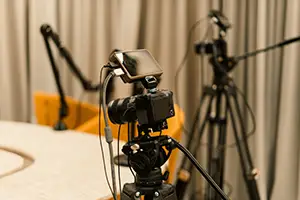
Associations may enact reasonable restrictions governing the audio- or videotaping of meetings. These restrictions include:
1. Advance Notice
Many boards require owners to provide 24 to 48 hours’ advance written notice of their intent to record the meeting. If the board itself will record the meeting, it must also provide owners with formal notice, preferably along with the official notice of the meeting.
2. Designated Recording Locations
Associations often specify where owners can place their recording devices. The goal is to avoid blocking entrances/exits, aisles, or other attendees. Obviously, the same rule must apply to the board if it wants to record HOA meetings.
3. Stationary Equipment Only
Owners may be required to place their recording device on a table or tripod. This prevents the owner from walking around the room, trying to capture certain angles, which can block other attendees’ view of the meeting.
4. Silent Operations Required
To minimize disruptions, the association may require owners to disable their flashes and all equipment sounds, such as shutter clicks and notification alerts. This keeps the meeting focused and productive.
5. No Additional Lighting
The board can require that recording be done using available room lighting and without professional lighting. The reason behind this is that professional lighting tends to take up space, obstruct views, or be generally distracting to participants.
6. Recorder Must Stay Seated
Associations can require those who wish to record the meeting to remain seated at all times. They should not stand near the board table or in front of other people, as this can block the view.
7. No Interferences
Owners may not interrupt meeting proceedings for the sake of their recording. Common examples include adjusting equipment, asking speakers to repeat themselves, or any other form of disruption.
8. Compliance With Meeting Conduct Rules
Recording does not excuse an owner from following the association’s normal rules on decorum and behavior. All attendees are subject to the same expectations and etiquette requirements.
9. Distribution Restrictions
Associations may require recorders to keep tapes or films to themselves or use them for official purposes only. This means prohibiting them from posting clips online or sharing the recordings with people outside of the association.
Is it Legal to Record an HOA Meeting? Answered!
Meetings serve a clear and essential purpose in community operations and management. While the minutes serve as the official documentation, it can sometimes help to record HOA meetings. Condo associations are even legally required to allow members to do so. That said, boards should enforce reasonable rules to minimize disruptions and keep meetings efficient.
First Community Management provides expert HOA, condo, and co-op management services to communities in Chicago. Call us today at (312) 829 8900 or contact us online to learn more!
RELATED ARTICLES: