An HOA meeting agenda establishes the flow of an official gathering of the board or association. It itemizes the topics up for discussion or voting, ensuring the meeting stays on track. With a clear and structured agenda, associations can improve productivity, promote transparency, and streamline meetings.
What is an HOA Meeting Agenda?
In an HOA or condo association, meetings allow boards to share essential updates, discuss community matters, and vote on decisions. Yet, these meetings should not run without direction.
Enter the homeowners association meeting agenda. An agenda is a structured outline of topics, reports, and actions that will be discussed or voted on at an official meeting. This agenda is necessary for most meeting types, including annual meetings, board meetings, and even executive sessions.
An HOA meeting agenda serves as a roadmap that keeps the board on track and on schedule. It informs residents of what is up for discussion at a meeting, allowing them to decide to attend.
Is an HOA Meeting Agenda Required?
Whether or not an association must prepare and distribute a meeting agenda depends on state laws and the governing documents. In Illinois, neither the Condominium Property Act nor the Common Interest Community Association Act expressly requires it.
That said, board members must check their governing documents for further guidance. For many communities, an agenda is mandated by their bylaws. Some are even required to send the agenda, together with the meeting notice, to owners ahead of time.
How Does an HOA Meeting Agenda Help?
A meeting agenda is beneficial for associations because it helps reduce confusion, prevent arguments, and avoid delays. With a well-organized agenda, owners are informed of what will be discussed, why it is being discussed, and whether a decision is expected. It also lets owners know when they can provide feedback.
As a result, directors can come prepared, and discussions remain focused. When owners understand the process, they are also less likely to question the board or challenge decisions. Furthermore, a clear agenda ensures that the board doesn’t miss any important items.
How to Make a Clear and Structured HOA Agenda
Drafting an agenda is not always easy. In fact, many association boards struggle with it. Here are the best strategies for creating an organized and effective agenda.
1. Start With Meeting Objectives
Before writing the agenda, the board must first identify what it intends to accomplish. What decisions should the board make? What updates should it share with owners? Which issues require further scrutiny?
For example, an annual HOA meeting agenda typically designates a portion for board elections. Including this item in the agenda will help owners set expectations. That said, the agenda should only include items that need board attention.
2. Separate Information Items From Action Items
Updates and decisions are not the same. The former is simply the sharing of information, while the latter requires a board vote. It is important to separate these HOA agenda items. In doing so, the board can know when they must discuss or vote on something.
Common examples of information items include the manager’s report, the financial report, committee updates, and project status updates. Meanwhile, action items usually include contract approvals, budget approvals, rule change approvals, and expense authorizations.
3. Use a Consistent Agenda Format
Whether it’s crafting a condo board meeting agenda or otherwise, a consistent format is key. When the board uses a standard format, everyone knows what to expect.
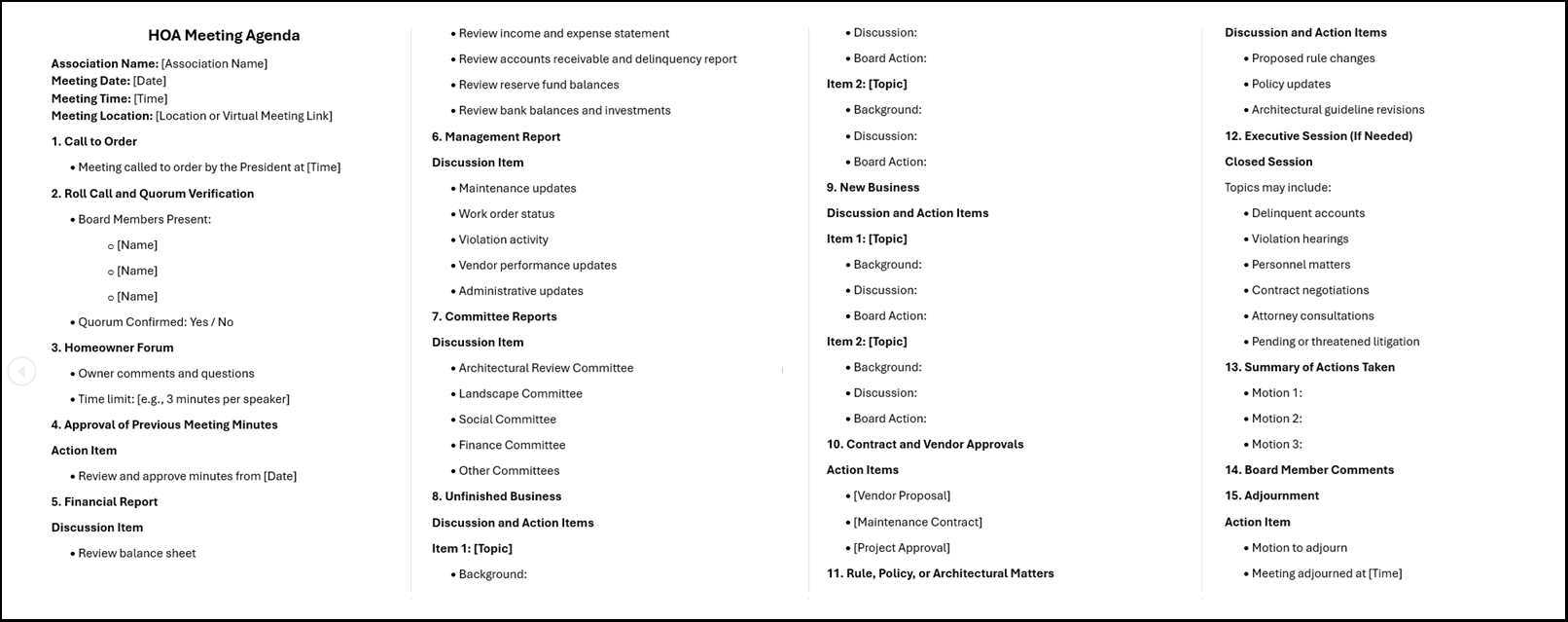
A typical HOA board meeting agenda might include:
- Call to Order
- Roll Call or Establish Quorum
- Owner Comment Period
- Approval of Previous Meeting Minutes
- Financial Report
- Management Report
- Committee Reports
- Unfinished Business
- New Business
- Action Items and Votes
- Board Comments
- Adjournment
By sticking to the same structure in every meeting, associations can promote efficiency and productivity. After all, no one wants to attend a meeting that goes on for hours on end.
4. Include Supporting Materials in Advance
Those who have a say in a decision should receive supporting materials ahead of time. For board elections, owners should get a list of candidates and their platforms, along with ballots and proxies. Meanwhile, for board decisions, it is imperative to prepare financial statements, vendor proposals, current contracts, committee reports, and reserve studies.
Distributing these materials beforehand gives everyone a chance to review them prior to the meeting. This means less time spent reading documents and forming arguments in their heads.
5. Prioritize Important Items
Association boards should discuss critical items near the beginning of the meeting. Examples include budget adoptions, contract approvals, reserve expenditures, and legal matters. If the board leaves these items until the end, there’s a higher chance of rushing through them or postponing them altogether, especially if the meeting runs long.
6. Assign Time Estimates
Adding estimated times for each item can help keep discussions short and productive. For example, the board can allocate 10 minutes to the financial report and another 20 minutes to discuss the landscape contract. The amount of time should reflect the gravity or complexity of the item. This will prevent the board from focusing on just a handful of topics for the entire meeting.
7. Clearly State Desired Outcomes
Every major item should identify its purpose. For example, if the board intends to discuss a master insurance proposal, the agenda should indicate whether it’s only for discussion or whether a board vote is necessary.
Can the Board Discuss Items Not on the Meeting Agenda?
Meetings should strictly follow the HOA board meeting agenda. While certain topics outside of the agenda may be brought up, it is important for the board to simply acknowledge them and then table the matter for a later meeting. The board should never decide on any item that isn’t on the agenda.
This will help keep the meeting focused and productive. Moreover, it ensures that the meeting sticks to the topics that the agenda promised, which can be a pain point for absentees. Owners may complain if the board votes on an item that wasn’t on the published or advertised agenda.
HOA Meeting Agenda Sample
Crafting a meeting agenda can prove difficult without a guide. To help out, below is a template that associations can use.
Download Your HOA Meeting Agenda Template Here
Download Your HOA Meeting Agenda Template Here
A Necessary Tool
Every association or board meeting should come with an HOA meeting agenda. Without an agenda, it is easy to lose track of the meeting flow and end up unproductive. When drafting an agenda, the board should employ certain strategies to ensure conciseness, transparency, and consistency.
First Community Management provides expert HOA, condo, and co-op management services to communities in Chicago. Call us today at (312) 829 8900 or contact us online to learn more!
RELATED ARTICLES:
- Illinois Condominium Property Act: Key Points To Be Aware Of
- HOA Meeting Notice Best Practices For Better Attendance
- HOA Meeting Etiquette: A Guide For The Board And Homeowners