

The HOA meeting minutes serve as a record of actions, votes, and attendance of an association meeting. Board members, particularly the secretary, must know how to take proper minutes. While the format remains largely the same for every community, the method for recording the meeting minutes can vary, with many moving to modern tools.
Are HOA Meeting Minutes Required?
Most state laws and governing documents require associations to take meeting minutes. In Illinois, both condominiums (765 ILCS 605/19) and HOAs (765 ILCS 160/1-30) must record minutes. Moreover, HOA meeting minutes requirements clearly state that associations must maintain a copy for at least seven years.
Board members should check their governing documents for additional guidance. Some have specific standards and formats to follow, while others are more relaxed. There are also communities that require distribution of the meeting minutes as per their bylaws.
Ways to Record Homeowners Association Minutes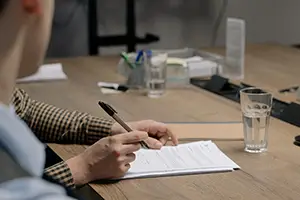
In general, there are three ways to take HOA meeting minutes: by hand, using a computer, and using modern tools. Let’s discuss these below.
Handwritten
The most traditional method for recording minutes is to use a pen and paper. Before the digital age, handwritten minutes were the norm. Today, most communities leverage technology for communication, documentation, and distribution.
Computerized
Computers are perhaps the most widely used method for taking minutes. Typing supports speed and eliminates confusion arising from messy penmanship. Moreover, computerized minutes help save costs on paper.
Modern Tools
With the advent of AI, more and more communities are shifting to use AI tools to automatically transcribe audio, summarize decisions, and assign action items. These solutions eliminate the need for manual note-taking.
Of course, even if an association relies on modern tools, the secretary must still oversee the minutes. While AI can be very helpful, it is not perfect. Even the most advanced tools can still make mistakes or mishear words.
How to Write HOA Meeting Minutes
Recording meeting minutes can come as a challenge with no guidance. Here are the things to include and remember when taking minutes.
Essential Details
The meeting minutes must contain essential information, including the name of the HOA, the meeting type, the date, and the legal address of the location. The exact time the meeting was called to order must also be included. Similarly, the minutes must reflect the exact time of adjournment.
Additionally, the HOA board meeting minutes should show the names of all board members present and absent. Any management representatives or guests can also be included. Homeowner names need not be jotted down, but boards can still attach the sign-in sheet to the final minutes.
Furthermore, the minutes must demonstrate a clear quorum. It should verify that a quorum of board members or homeowners (for annual meetings) was established to conduct official business.
Actions and Motions
The HOA meeting minutes must reflect the actions and motions made. For every motion proposed, the minutes must explicitly document the exact wording, the names of the board members who made and seconded the motion, and the outcome (passed, failed, or tabled). The voting results should also be recorded.
Keep in mind that a simple “4-1 to approve” is enough to document the voting results. Unless a roll-call vote is required, the minutes need not name who voted for or against.
Post-Meeting Procedures
Meeting minutes don’t get approved until the next meeting. Of course, that doesn’t mean that draft minutes can’t be distributed. Most associations are required to make a draft copy available to all homeowners for review within 30 days of the meeting.
Then, at the next meeting, the board can vote to approve the minutes. Once approved, the secretary and president will typically sign and date the document.
Top Tips for Taking HOA Meeting Minutes
Many board secretaries struggle to record clear and accurate minutes. By adopting proven strategies, associations can make the process simpler. Here are the best tips for taking HOA minutes.
1. Come Prepared
The minutes-taker must arrive at the board meeting on time and with all the tools they will need. This can include a pen, a notebook, a laptop (and charger), or even a tablet. Preparation is key.
2. Organize Notes by Using a Clear Format
Secretaries can keep their notes organized by using headings, bullet points, and indentations. These tools will make them easier to read and reference later. Some people also find it helpful to use the agenda as a starting point for organizing their notes.
3. Capture Key Points
It is important to concentrate on the key discussions and outcomes during the meeting. These include the decisions, action items, and all other important information that was brought up.
This will require the taker to listen carefully so they can document specific instructions or tasks assigned to individuals or committees. Additionally, with active listening, they can make note of any timelines or costs associated with action items.
4. Be Concise
It can be tempting to try to record word-for-word what happens during the meeting, but the minutes aren’t a script. They should summarize key information, motions, and decisions. Plus, by typing in everything, the secretary won’t have the capacity to truly listen and engage in the meeting.
Instead, they should take note of the main ideas, summarize discussions, resolutions, and any relevant numbers or figures. Use abbreviations or symbols to save time, space, and brain power.
5. Know What to Leave Out
Not everything needs to go in the minutes. It is best to avoid including personal opinions, emotional statements, quotes, or subjective arguments. This isn’t a commentary.
Moreover, the minutes should not include any sensitive or personal resident issues. Executive session minutes may address these, but even then, most avoid disclosing any identifying information.
6. Record Motions and Voting Results
Boards should make note of any motions made during the meeting and record voting results if applicable. The minutes should include the names or positions of those who made motions and seconded them. As previously mentioned, voting results don’t need to reflect the names of the voters unless it’s a roll-call vote.
7. Ask Questions
If the taker has any questions or needs clarification at any point during the board meeting, they must not hesitate to ask. This will help ensure that their notes accurately reflect the information discussed.
8. Act Promptly After the Meeting
After the meeting, the secretary should take time to review and summarize their notes while the information is still fresh in their mind. At the next meeting, the rest of the board will review the HOA board minutes to ensure accuracy. After all, the minutes will serve as a historical record of the association’s decisions.
HOA Meeting Minutes Template
Download Your HOA Meeting Minutes Template Here

A Reference for Everyone
The HOA meeting minutes play an important role in documenting discussions, monitoring action items, and guiding future decisions. It is important to know how to accurately and professionally prepare the meeting minutes to ensure seamless operations. When in doubt, it is best to seek help from an HOA management company.
First Community Management provides expert HOA, condo, and co-op management services to communities in Chicago. Call us today at (312) 829 8900 or contact us online to learn more!
RELATED ARTICLES:
- HOA Meeting Notice Best Practices For Better Attendance
- How To Build An HOA Meeting Agenda Homeowners Can Follow
- HOA Meeting Etiquette: A Guide For The Board And Homeowners