

The HOA ballot counting procedure is a critical part of running fair and valid elections in any association. Board members must follow both state laws and their governing documents to ensure accuracy and transparency. With a clear process in place, the HOA can avoid disputes, protect the integrity of the election, and build trust among homeowners.
What is the HOA Ballot Counting Procedure in Illinois?
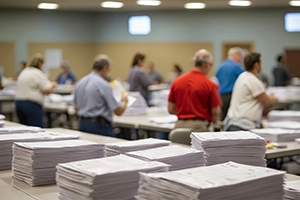
The procedure for HOA ballot counting depends on state laws and the governing documents. In Illinois, two statutes play essential roles in shaping how associations must count votes:
These laws outline how an association must conduct its elections. The CC&Rs and bylaws, on the other hand, typically consist of more detailed processes and requirements.
In general, the HOA ballot counting procedure follows several key steps:
1. Distribution of Ballots
First, the board distributes ballots to all voters in accordance with the rules in the governing documents. This may include paper ballots, proxies, or electronic voting if properly adopted.
The board should give itself ample time for this step. In doing so, it can ensure that all voting owners receive their ballots, have enough time to consider and cast their votes, and return the completed ballots. Illinois law also allows voters to submit their ballot in person at the election meeting.
2. Verification of Eligibility
Not all owners may be able to vote. Depending on the governing documents, only members in good standing or those otherwise allowed under the bylaws can typically vote. Some associations, after notice and an opportunity to be heard, suspend a member’s voting rights until the violation is corrected.
3. Collection of Ballots
Upon the deadline, the board will collect the ballots. It is important to keep these ballots in a secure place until counting can take place. This will prevent tampering or disputes.
Of course, Illinois law allows owners to submit their ballots in person at the meeting where the election will be held. Board members should keep that in mind and have preparations in place.
4. Counting of Ballots
At the election meeting, the board will then count the ballots. It is essential to announce the results and record them thereafter. Illinois law requires that elections follow proper procedures when counting votes.
Who Can Count HOA Ballots?
Under 805 ILCS 105/107.35, members can request the appointment of an inspector or inspectors of election. These individuals are responsible for HOA vote counting and reporting results.
It is worth noting that this section comes from the Illinois General Not-for-Profit Corporation Act. Most associations are formed as nonprofit corporations in the state.
That said, an independent inspector is not mandatory. An association’s governing documents may require one, but Illinois law does not. In practice, those who can count association ballots include:
- The association’s management company,
- Designated volunteers or committee members, and/or
- Board members, if the bylaws permit.
A key provision of Illinois law allows candidates or their representatives to be present during the HOA ballot-counting process. This adds an extra layer of transparency, ensuring fairness during elections.
Still, if the association can afford it, it is best to hire a neutral third party or inspector. This helps reduce the risk of disputes and claims of bias.
Are HOA Votes Confidential?
Confidentiality in association voting largely depends on the method used. In Illinois, votes are not automatically confidential.
Unless the association adopts secret ballot procedures, owners generally have the right to review ballots and voting records. Both the Condominium Property Act and CICAA allow owners to inspect these records for up to one year.
Secret ballots, on the other hand, don’t reveal the identity of the voter. Instead, these ballots may list only the unit’s voting interest and the vote itself.
Even with secret ballots, there are safeguards. The association must still verify voter eligibility and retain records of the ballots. Additionally, the process must allow observation of the count.
To avoid complaints and set expectations, boards should clearly state in their rules whether or not voting is confidential.
Types of Voting Ballots in Condos and HOAs
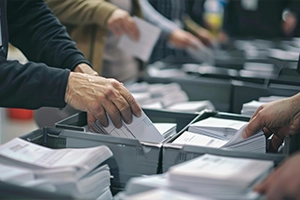
Depending on the governing documents, associations can use several types of ballots. These include secret ballots, proxy ballots, written ballots, and electronic ballots. Each one has its own pros and cons, so boards should choose the method that best suits the association’s needs.
1. Secret Ballots
As the name suggests, these ballots protect the voter’s identity. Most associations use them for board elections. Because it’s difficult to verify eligibility without identification, boards must adopt specific procedures for validation.
2. Proxy Ballots
With proxy ballots, an owner authorizes another to vote on their behalf. Proxies can help increase voter turnout, but they can cause problems concerning fraud and tampering.
Moreover, Illinois law does not allow proxy votes for board elections in HOAs — only in other votes (765 ILCS 160/1-25). For condominiums, if the board adopts the rule early enough, or if the bylaws already say so, owners can’t vote by proxy in board elections (765 ILCS 605/18). Instead, they can vote only in two ways: in person at the meeting or via approved electronic voting.
3. Written Ballots
These are traditional paper ballots that owners send via mail, delivery, or in person at a meeting. They typically include the voter’s name, unlike secret ballots.
4. Electronic Ballots
Illinois allows electronic voting if the association adopts rules in advance (765 ILCS 605/18). The board must send out instructions for electronic voting ahead of the election. These instructions need to go out at least 10 days before the meeting, but no earlier than 30 days before.
The notice must include the names of all candidates who properly submitted their candidacy on time. It must also allow voters to write in other candidates, even if their names are not on the ballot.
If a homeowner votes electronically, they can still change their mind. They can attend the election meeting in person and vote again. If they do, their in-person vote will replace and cancel their earlier electronic vote.
Best Practices for HOA Counting Votes
To ensure a smooth HOA ballot counting procedure, board members should implement the following strategies.
1. Adhere to the Governing Documents
First and foremost, board members must strictly and consistently adhere to state laws and the governing documents. These documents dictate the HOA ballot counting procedure that associations must follow.
2. Use Neutral Inspectors
Whenever possible, associations should hire third-party inspectors to oversee and count the votes. This will help promote transparency, avoid disputes, and build trust.
3. Openly Count Ballots
Associations should count the votes at an open meeting. Allowing observers to attend supports transparency. Additionally, Illinois law states that candidates or their representatives are allowed to be an HOA ballot-counting witness.
4. Document Everything
Associations must document the process with care and accuracy. The meeting minutes must reflect how the ballots were counted and the final results. This creates a paper trail, which can be used to clarify questions or concerns later on.
5. Retain Ballots
According to Illinois law, associations must retain ballots and proxies for at least one year (765 ILCS 160/1-30 and 765 ILCS 605/18.5).
6. Consult Legal Counsel
Finally, when in doubt, the board should seek legal advice from a lawyer or management company. Mistakes in the election process can invalidate the results, forcing the association to do everything over.
Parting Advice
A proper HOA ballot counting procedure is essential for any condo association or HOA. This process must follow state laws and the association’s governing documents. With clear standards and practices in place, the board can ensure a smooth and error-free election every time.
First Community Management provides expert HOA, condo, and co-op management services to communities in Chicago. Call us today at (312) 829 8900 or contact us online to learn more!
RELATED ARTICLES:
- HOA Election Process: What Happens From Nominations To Results
- HOA Board Campaign Do’s And Don’ts For Candidates
- What To Include In Your HOA Candidate Statement