Condo capital improvements play an integral role in the long-term appeal of any community. Yet, many condo boards don’t know the first thing about them or how they differ from regular maintenance. While both fall under the same broad category, they have distinct purposes, funding sources, and impacts.
Condo Capital Improvements vs Maintenance
Condominium association board members are responsible for managing the upkeep and maintenance of their shared association properties to ensure they remain safe, functional, and attractive for all residents. Two essential components of this responsibility are maintenance and capital improvements. While both are critical for ensuring the ongoing value and satisfaction of the property, there are significant differences between the two.
What is a Capital Improvement?
Some board members might have heard the term before and simply brushed it off, but it is important to understand what capital improvements are and what they involve.
The capital improvement definition is as follows:
Condo capital improvements are larger projects that involve significant investments of time and money. Capital projects are intended to improve the value, function, or appearance of the property and require significant planning.
They are typically considered to be long-term investments. They may involve major repairs, renovations, or upgrades to the property. Capital improvement projects are often funded through reserves, special assessments, or financing. These are not typically considered part of the association’s regular operating budget.
Capital improvements examples include:
- Adding a fitness center
- Upgrading to energy-efficient windows
- Installing new security systems
- Replacing a basic roof with a premium material
- Repaving a parking lot
- Installing new elevators
What is Condo Maintenance?
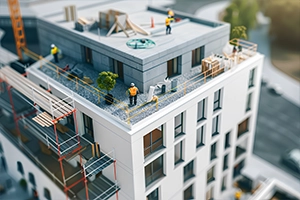
Condo maintenance refers to the ongoing upkeep of the property to prevent or fix issues as they arise. Routine tasks should be part of the condo association’s maintenance plan. Maintenance items are generally considered to be regular expenses that are budgeted for and paid out of the association’s operating budget.
Condo maintenance examples include:
- Fixing a leaking roof
- Cleaning common areas
- Repainting hallways
- Replacing light bulbs
- Servicing HVAC systems
- Maintaining landscaping
- Repairing plumbing lines
Differences Between Condo Capital Improvements and Maintenance
Condo association capital improvements and maintenance are both essential components of community management. That said, they differ in several ways, including purpose and scope, funding source, reserve use, frequency, approval requirements, and impact on the community. Let’s discuss these below.
1. Purpose and Scope
Maintenance focuses on preserving the components that an association already has. The objective of this task is to keep systems and elements in good working condition. This includes cleaning, servicing, repairing, or replacing worn parts.
Capital improvements go a step further. The board is essentially adding something new or upgrading the component beyond its original condition. This might include installing a new amenity or improving an old system to achieve a higher standard.
2. Funding Source
Funding for condo maintenance typically comes from the operating budget. These expenses are predictable and expected, so the board can factor them into condo fees quite easily. They are also recurring in nature, with the need arising every year.
On the other hand, capital improvements source funding from special assessments, reserves, or through a capital improvement fee HOA members must pay. Because these projects cost more and don’t happen regularly, it’s not always possible to include them in the operating budget.
That said, to minimize financial strain on owners and the reserves, the board should do its best to factor capital improvements into the budget. This way, the board can collect the necessary funds through condo dues.
3. Reserve Use
When it comes to reserves, the biggest difference between condo capital improvements and maintenance involves eligibility and intent. Maintenance is not a reserve expense. Associations fund these costs through the operating budget. If the board uses the reserves for routine maintenance, it’s usually a sign of mismanagement.
Capital projects, on the other hand, may qualify for reserve funding, but only if they involve the repair or replacement of existing components listed in the reserve study. In Illinois, condominiums are even required to set aside reasonable reserves for capital expenditures (765 ILCS 605/9).
That said, the capital reserve fund typically does not cover new additions or upgrades. To pay for these expenses, the board needs to collect money from the unit owners through regular dues or special assessments.
4. Frequency
Maintenance happens regularly. They are predictable in nature, occurring either daily, monthly, or annually. It is easy to schedule them because they take place repeatedly.
In contrast, capital improvements are less frequent. They usually occur when the board decides to upgrade the condo or when a major component reaches the end of its life, requiring a replacement with something better.
5. Approval Requirements
Maintenance usually does not require owner approval. The board has the authority to carry out routine upkeep. Plus, requiring owner approval for routine tasks will only delay them.
In comparison, capital improvements often require owner approval. It ultimately depends on state laws and the governing documents. While Illinois law is silent on the matter, many condo CC&Rs and bylaws mandate membership approval for upgrades, improvements, and additions. This is especially true if the project is expensive or changes the nature of the association.
6. Impact on the Community
Maintenance keeps the community functional and safe. Residents may not always notice it unless something breaks or interferes with their daily lives.
Meanwhile, condo capital improvements are more visible. New additions or upgrades can enhance the appearance of the community as well as the lifestyle of residents. They can also increase property values, making the neighborhood more attractive to new buyers.
That said, these projects can also lead to higher costs for owners. Adding a new amenity, for instance, raises maintenance costs, not to mention having to pay for the cost of construction in the first place.
Finally, major projects can disrupt peace and block traffic. New construction and large renovations tend to have that effect. Plus, they can bring noise, odors, and other distractions, even if only temporarily.
Similarities of Condo Capital Improvements and Maintenance
Both maintenance and capital improvements involve work on common elements. These include roofs, hallways, elevators, plumbing systems, and exterior structures. In both cases, the board must plan, budget, and often hire vendors to complete the work.
Both also affect the association’s finances. Whether it is routine upkeep or a major upgrade, the cost can influence the operating budget or the reserves. Owners may feel the effects through higher regular dues or special assessments.
Finally, both help protect property values. Well-maintained and updated buildings tend to attract buyers and increase in value over time.
The Best Plan Forward
When planning for the future of a COA, board members must consider both ongoing maintenance needs and condo capital improvements. Adequately funding both areas through annual budget planning is an important part of keeping financial management in good health and the overall well-being of the shared community property looking its best.
For help navigating the myriad responsibilities of serving on a Chicago condo board, turn to us at First Community Management for help.